





Modi’s bulldozer crushes the hopes of the poor who rely on MNREGA.
Dr. Chayanika Uniyal

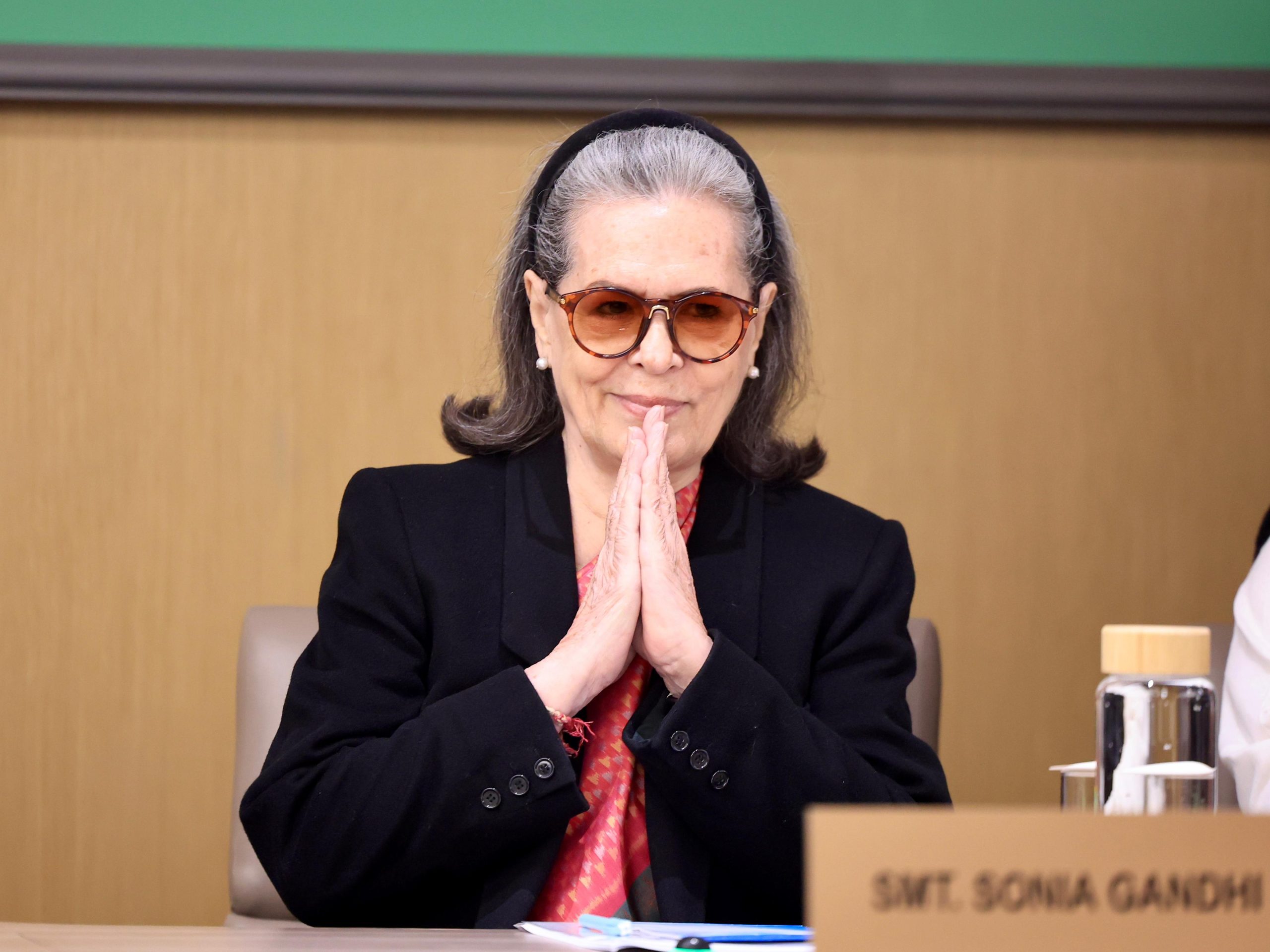
New Delhi. This historic law came into existence in 2005 under the visionary leadership of UPA Chairperson Mrs. Sonia Gandhi and then Prime Minister Dr. Manmohan Singh. For the first time, this law ensured that any family in rural India willing to do manual labor would receive a legal guarantee of 100 days of employment per year. Its primary objective was to provide social security and dignified employment to the rural poor. The results were unprecedented. In just nine years, more than 1,750 crore days of employment were generated under MGNREGA. This scheme proved to be a milestone for rural laborers and workers.
Moreover, Nobel laureate economist Prof. Joseph Stiglitz said in 2016:
“The Mahatma Gandhi National Rural Employment Guarantee Act is India’s single largest and most fundamental program, and the whole world should learn from it.”
However, it is also a fact that Prime Minister Modi, even as Chief Minister, was opposed to this scheme, and after becoming Prime Minister, he continuously attacked MGNREGA. As soon as the BJP government came to power, there were massive budget cuts, and there were talks of limiting it to less than one-third of India’s districts.
This was the same period when, in 2015, the World Bank described MGNREGA as the world’s largest employment program. And in the same year, in the Lok Sabha, the Prime Minister mocked the opposition, saying:
“My political understanding tells me that MNREGA should not be shut down, because it is a living monument to your failures. After being in power for so many years, you could not give a poor man anything more than a few days of digging ditches a month.”
The reality, however, is that today more than 12 crore active workers are registered under MGNREGA. This scheme is still the basis of livelihood for millions of families.
The importance of MGNREGA became even clearer during the COVID-19 pandemic. When the entire country was grappling with an employment crisis, MNREGA provided support to rural India. In 2020-21, its budget increased to a record level of ₹111,000 crore.
In a country with a vast population like India, where employment has always been a major challenge, and this crisis has been even more acute in rural areas,
MNREGA not only prevented the migration of unskilled laborers but also played a significant role in transforming the face of rural India.
Therefore, it is important to state clearly today that MNREGA is not a monument to the Congress party’s failure, but rather to its historic success. And because the BJP cannot demolish this monument, it has resorted to cowardly and deceitful tactics like changing its name. The central government has renamed it the ‘Viksit Bharat Guarantee for Employment and Livelihood Mission (Rural)’ — or ‘VB-GRAM’.
The first and strongest objection is to this name change. Mahatma Gandhi is not just a name — he is the soul of this country, and the attempt to erase a scheme associated with his name is an attack on the country’s ethos, history, and constitution.
But the opposition is not limited to just the name change. The government has conspired to eliminate the very soul of MNREGA — the “guarantee of employment” — in the provisions of this new bill.
First,
look at the changes made in the sharing of expenses.
Now it is proposed that
• 60 percent of the total expenditure will be borne by the central government,
• and 40 percent by the state governments.
While the reality is that until now, the burden on the states was only about 10 percent. This is not a technical change, but a direct financial trap for the states.
The central government is indeed saying that in the northeastern states, Uttarakhand, Himachal Pradesh, Jammu and Kashmir, and Union Territories, the central government will bear 90 percent of the expenditure, but what about the rest of the country?
Do poor and backward states like Bihar, Jharkhand, Rajasthan, Madhya Pradesh, and Chhattisgarh have less need?
The greatest strength of MNREGA was that it was implemented throughout the country and provided a legal guarantee of employment. However, Section 5(1) of the new proposal clearly states that the central government will now decide where this scheme will be implemented.
This means that:
• Employment will no longer be universal,
• Nor will it be a right of the states.
This is being turned into a discretionary scheme, not a guaranteed one. The central government will now also decide how much money each state will receive. The scheme will only operate to the extent of the funds provided by the central government. Moreover, the states will now have to bear 40 percent of the expenditure. The financial condition of the states is already precarious. If the demand for employment increases, the burden of expenditure on the states will increase even further.
What will be the result?
Either the states will default, or they will simply lose interest in the scheme. This means that the employment guarantee will gradually disappear on its own.
The new proposal links MNREGA to
• Water resources,
• Road construction,
• Digital infrastructure,
• and rural housing.
However, separate ministries and budgets already exist for all of these. So the question arises — does the government want to divert the MNREGA budget to other schemes?
If this happens, MNREGA will deviate from its original objective
and the scheme could completely go off track.
This new bill
• weakens the employment guarantee,
• places a financial burden on the states,
• and gives arbitrary power to the central government.
We will not allow MNREGA to become a “charity scheme.” It is the right of the poor, and rights are not taken away, but protected. The Congress party gave dignity to rural India by creating MNREGA, and this dignity should not be allowed to be erased under any circumstances. MNREGA was, is, and will remain — because it is a guarantee of the rights, dignity, and employment of millions of Indians.